Juhend õppejõule // Instructions for the teacher
| Õpikeskkond: | TalTech Moodle |
| Kursus: | Kestlikud õppemeetodid transpordis |
| Raamat: | Juhend õppejõule // Instructions for the teacher |
| Printija: | Külaliskasutaja |
| Kuupäev: | teisipäev, 28. juuli 2026, 12.47 PM |
Kirjeldus
Siit leiad infot, kuidas ülesannet tudengitele esitada, kuidas on kavandatud õpitegevused ja mida ning kuidas hinnata
- Lühike sissejuhatus ja selgitus kuidas töid planeerida ja hinnata.
- Täiendavat lugemist materjalid ja lingid, nt. IMO, SAE merenduse ettevõtetes.
- A short introduction and explanation of how to plan and evaluate works.
- Additional reading materials and links, e.g. IMO, SDG in maritime companies.
Sisukord
- 1. Säästva Arengu Eesmärgid // Sustainable Development Goals
- 2. Säästva Arengu Eesmärgid merenduse ettevõtetes // Sustainable Development Goals in maritime companies
- 3. SAE 9: tööstus, innovatsioon ja taristu õpiväljundid // SDG 9: industry, innovation and infrastructure learning outcomes
- 4. Ülesande õpetamine // Teaching the skills
1. Säästva Arengu Eesmärgid // Sustainable Development Goals
Säästva Arengu Eesmärgid (inglise keeles Sustainable Development Goals) on ÜRO poolt kokkulepitud suunad, mille täitmisega tegeletakse globaalselt, riiklikult ja ka ettevõte tasandil.
- Säästva Arengu Eesmärkidest Kliimaministeeriumi tõlgenduses saab hea ülevaate SIIT
- Säästva Arengu eesmärkidest merenduses IMO tõlgenduses saab hea ülevaate SIIT
The Sustainable Development Goals are a direction agreed by the United Nations, the fulfillment of which is dealt with globally, nationally and also at the company level.
2. Säästva Arengu Eesmärgid merenduse ettevõtetes // Sustainable Development Goals in maritime companies
Merenduse ettevõtted mõistavad oma vastutust kõikide Säästva Arengu Eesmärkide saavutamiseks. Lisaks erialaste STCW, IMO, MARPOLi, ISO, regulatsioonide ja standardite kasutamisele rakendavad nad SAEsid. Siin mõned näited, kuidas Säästva Arengu Eesmärgid on seotud merenduse ettevõtete juhtimise ja arenguga:
- Talinna Sadamal on mitmeid erinevaid kestlikkuse ja vastutustundlikkuse tegevusi, mille kohta loe SIIT
- Tallinkil on samuti põhjalik kestlikke ja vastutstundlike tegevuste plaan, mille kohta saab lugeda SIIT
- SAEd on samuti ka teiste riikide merendusettevõtete (nt. MAERSK, Carnival Corporation, Grimaldi Group, CMA CGM, port of Helsinki) prioriteediks
- kuidas kliimamuutused on seotud laevandusega
Maritime companies understand their responsibility to achieve all Sustainable Development Goals. In addition to using professional STCW, IMO, MARPOL, ISO, regulations and standards, they implement SDGs. Here are some examples of how the Sustainable Development Goals are related to the management and development of maritime companies:
- Port of Tallinn has several different sustainability and responsibility activities, which you can read about HERE
- Tallink also has a comprehensive plan for sustainable and responsible operations, which you can read about HERE
- SAEs are also a priority for other countries' maritime companies (e.g. MAERSK, Carnival Corporation, Grimaldi Group, CMA CGM, port of Helsinki).
- how climate change relates to shipping
3. SAE 9: tööstus, innovatsioon ja taristu õpiväljundid // SDG 9: industry, innovation and infrastructure learning outcomes
Käesolev ülesanne keskendub SAE 9 oskuste õpetamisele
- Tudeng selgitab mis on kvaliteetne, usaldusväärne, säästlik ja vastupidav taristu (meretranspordi vaates)
- Tudeng hindab, kuidas mõjutab (reisi või kauba) sadama lähedus (kesk)linna taristut ja selle arendamist
- Tudeng analüüsib võimalikke lahendusi, kuidas tagada sadamalinna taristu kvaliteet, usaldusväärsus ja linnaelanike heaolu
This assignment focuses on teaching SDG 9 skills
- The student explains what is high-quality, reliable, economical and durable infrastructure (from the point of view of sea transport)
- The student evaluates how the proximity of the (travel or cargo) port affects the infrastructure of the (central) city and its development
- The student analyses possible solutions for the port-city infrastructure to ensure the quality, reliability and well-being of the city's residents
4. Ülesande õpetamine // Teaching the skills
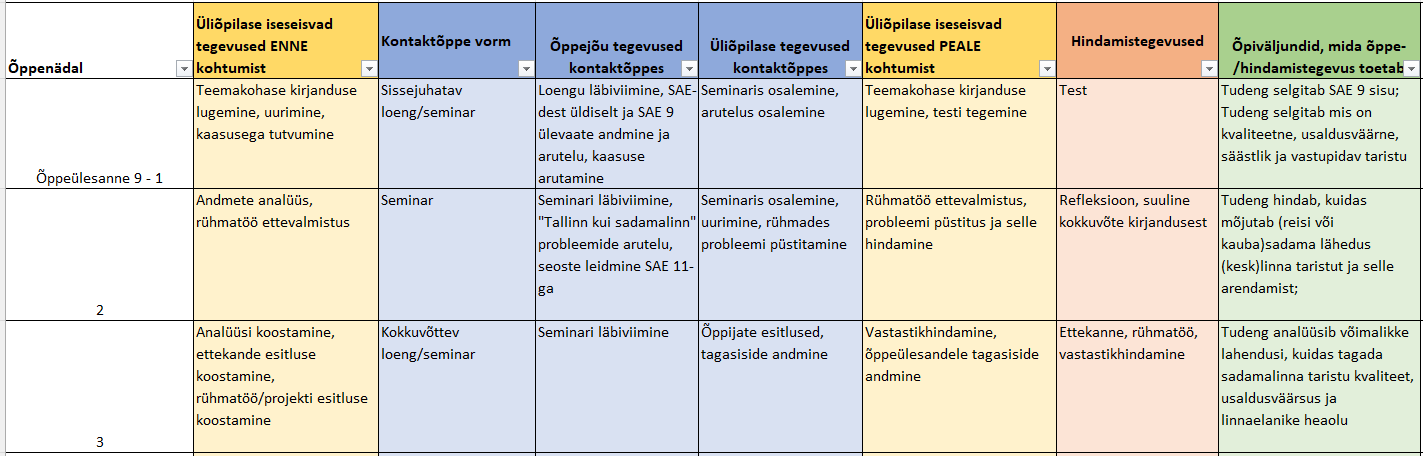
SAE 9 õpiväljundid on toodud eelmisel lehel; õppetegevused enne, tunni ajal ja pärast tundi õppejõu ja õppija jaoks on valitud iga õpiväljundi jaoks allpool:
SDG 9 learning outcomes have been selected for the task on a previous page; learning activities before, during and after the lesson for the teacher and students have been selected for each learning outcome below: